OS Convergence
Google Android
One operating system for a smart display and a tablet, held together at every distance and posture.
Google ran two products that needed to become one: a smart display you spoke to from across the room and a tablet you held in your hands. They shipped on different operating systems with incompatible spatial models, interaction grammars, and information densities. I led the alignment of the OS primitives so a single Android surface could behave correctly at every distance.
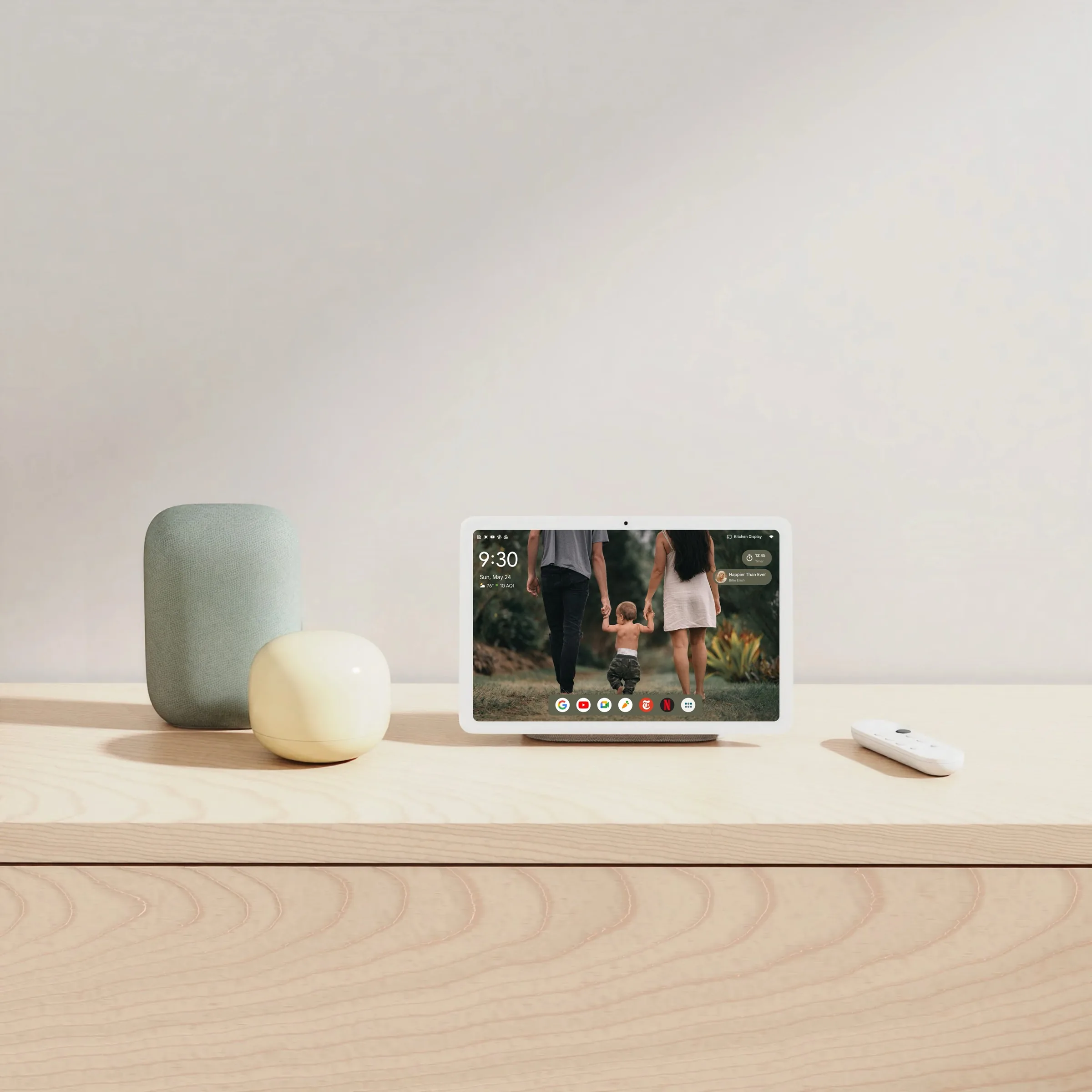
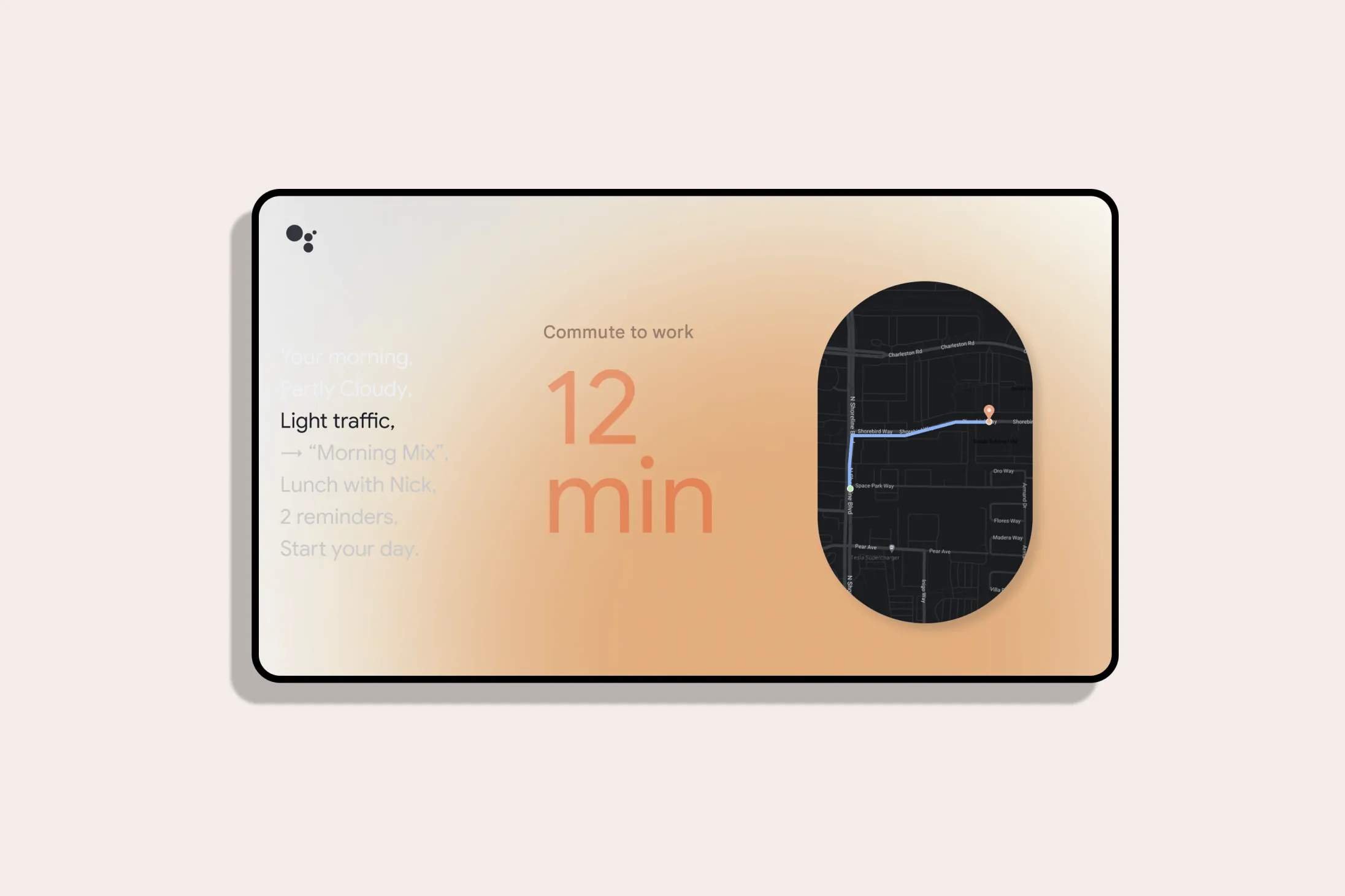
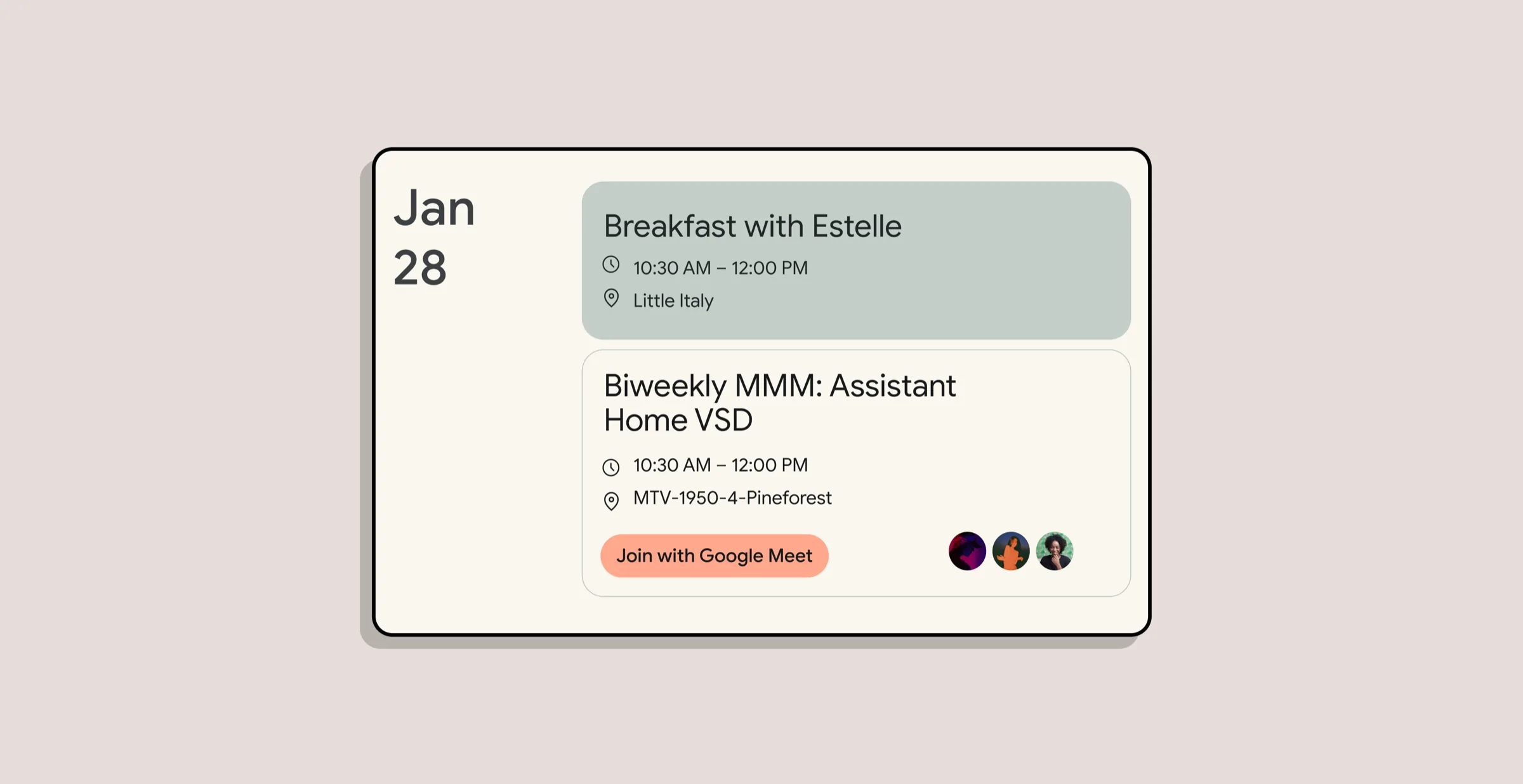
One operating system, two densities: far-field glance and leaned-in detail
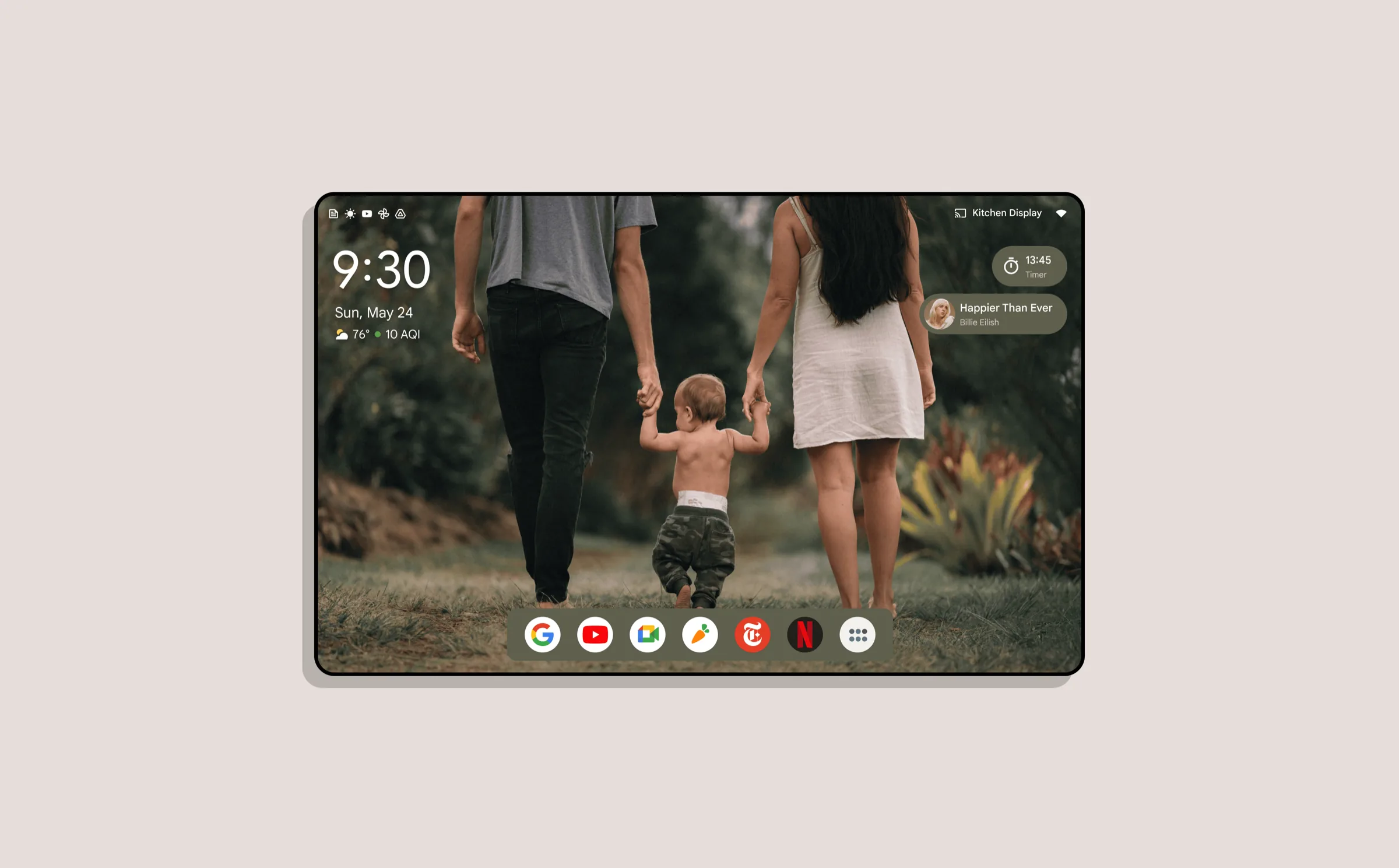
Ten feet: glanceable from across the room, with time and ambient state read first
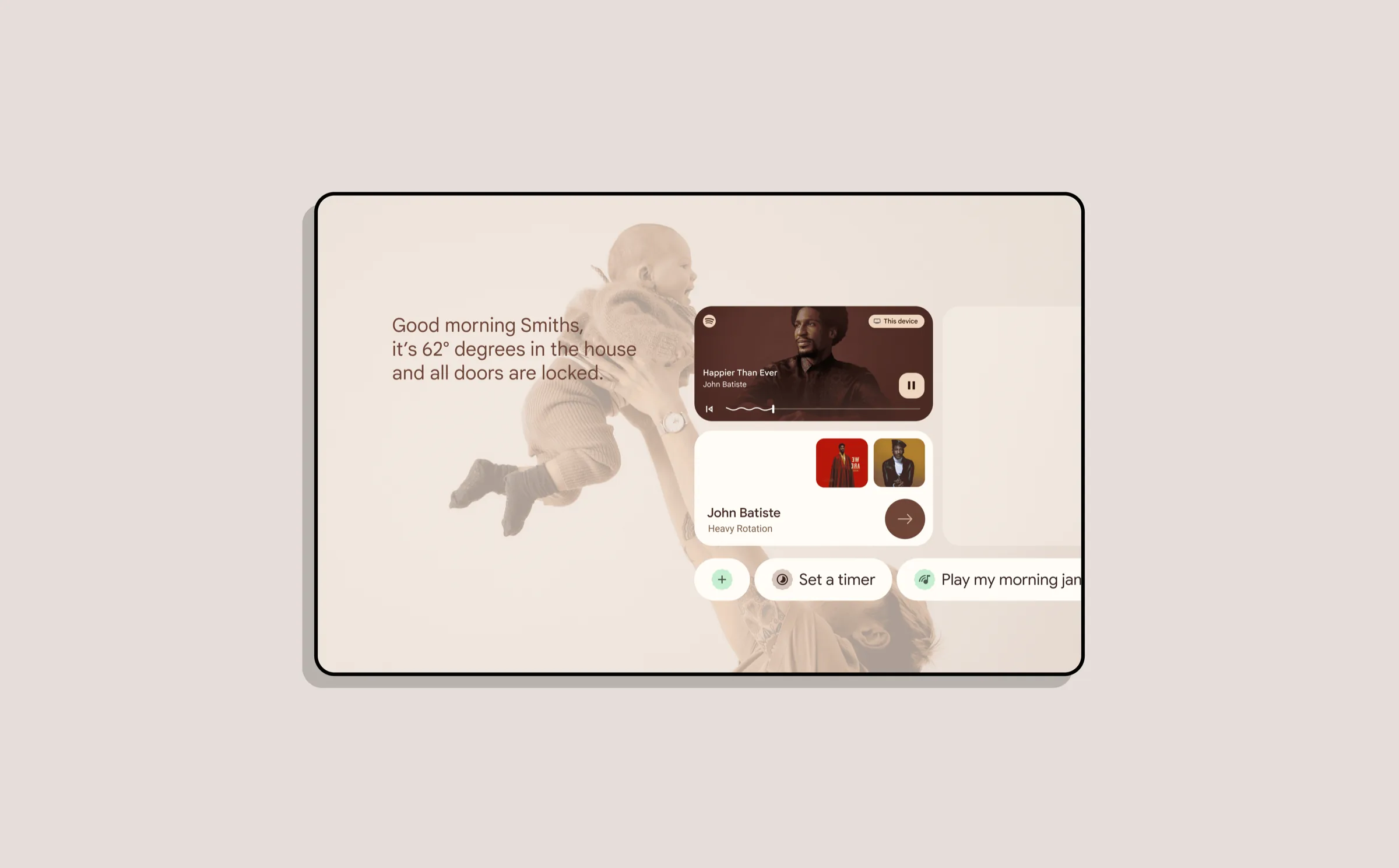
Three feet: counter distance, with controls within voice-and-glance
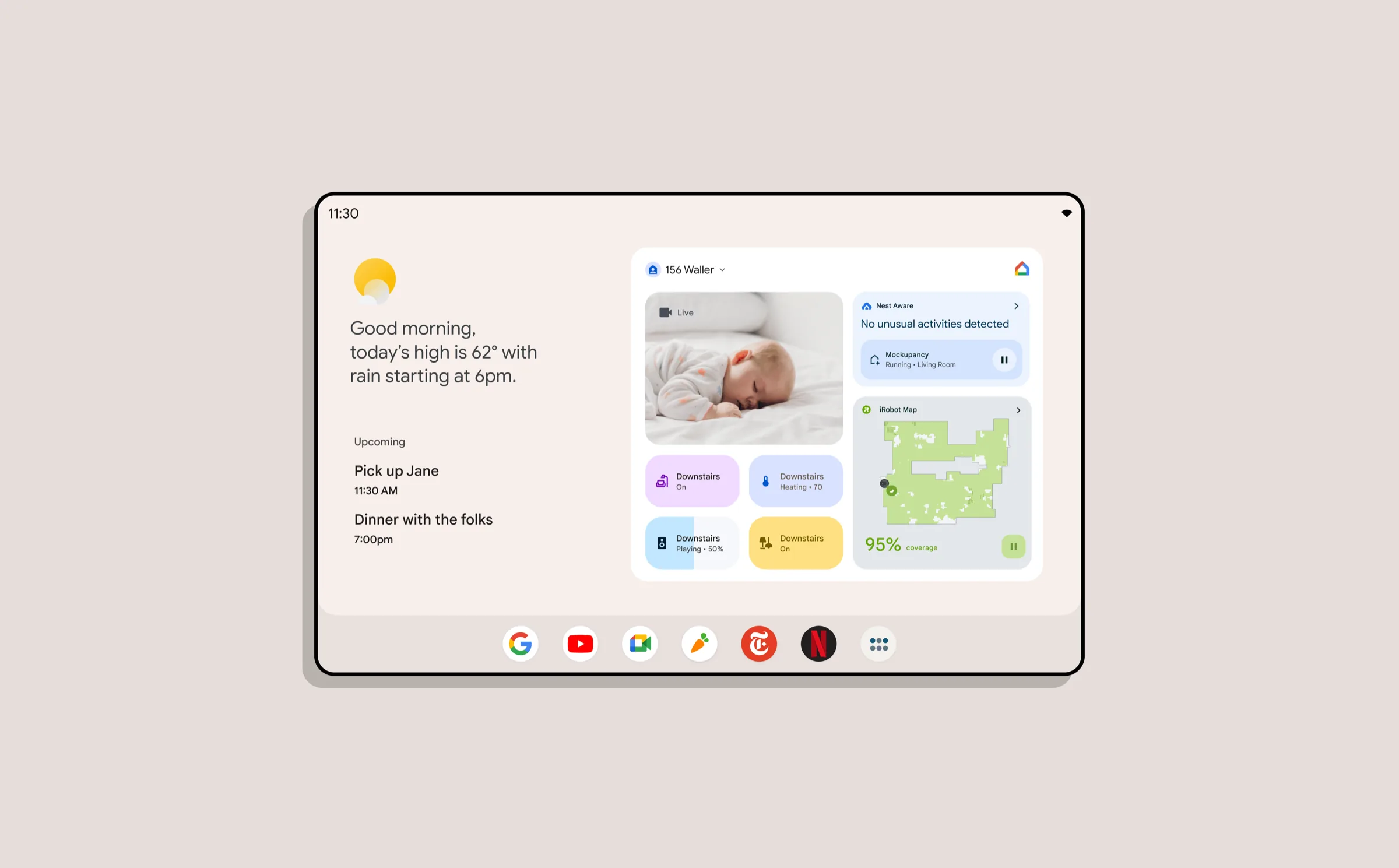
One foot: leaned in, the hierarchy deepens and controls expand
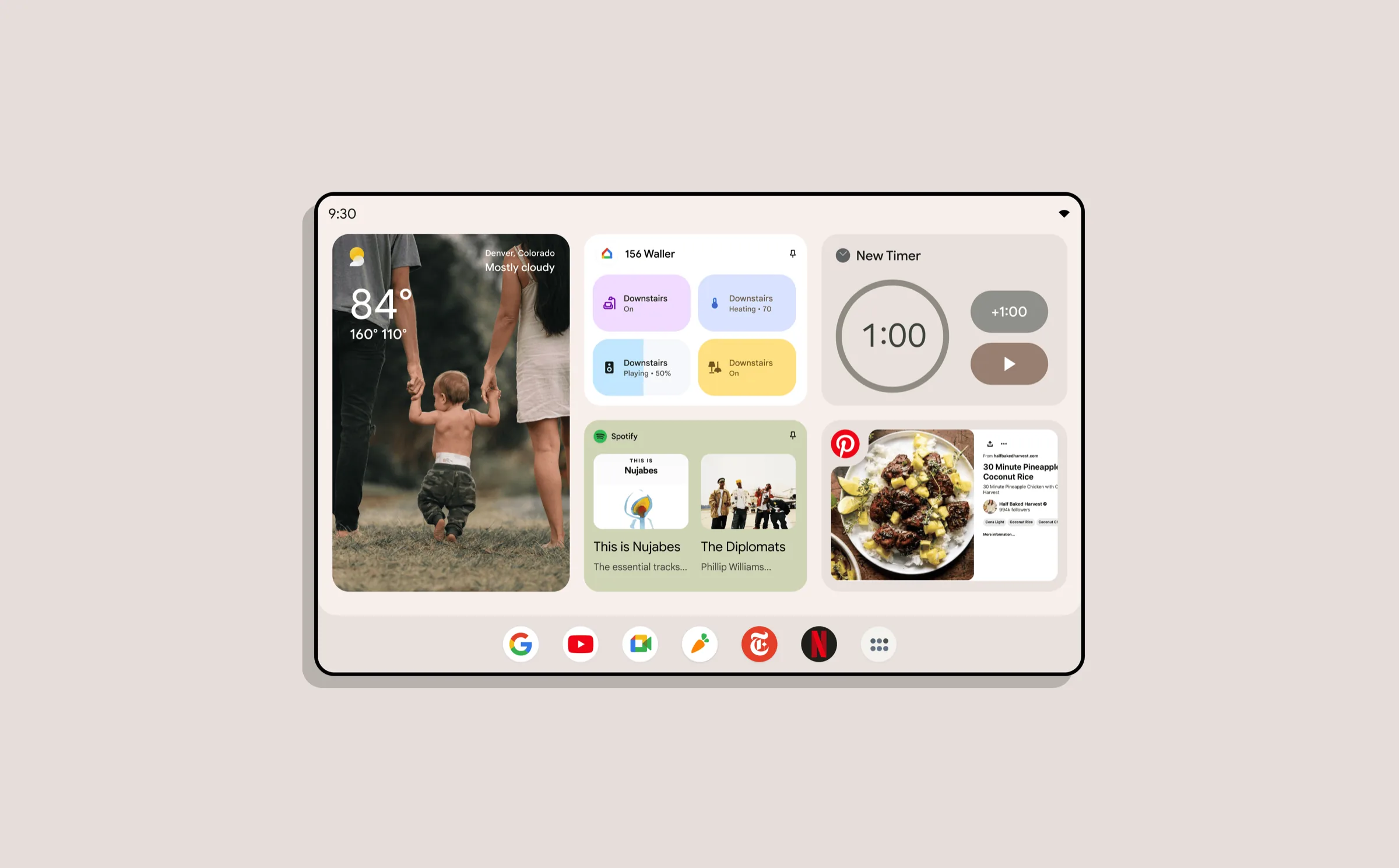
Touch: handheld tablet, full Android density, every primitive in reach
Density at distance
One product was meant to be seen from across the room. The other was meant to be held. The convergence asked a single device to be both: a tablet that docked into a smart display and undocked back into a tablet, without losing capability and without asking anyone to relearn the system.
I co-led the density studies that defined how one primitive, whether a card, a button, a clock, or a media control, resolves at each distance. Not four layouts. One layout traveling a continuous adaptation curve.
Ten feet. Time, weather, music state, the next calendar item. Nothing else. Type at a size that survived the room.
Three feet. Counter distance. Controls cohabit with content. Touch targets land where reach lands.
One foot. Leaned-in reading. Density rises. Hierarchy gains a second layer.
Touch. Full handheld Android. No concession to the smart display's restraint; the tablet got to be a tablet.
The same primitives at four distances, with no visible cut between them. I'm still working the same problem in three dimensions in Spatial Interfaces.
The dream framework
The reference image is a child walking between two parents, holding a hand in each. A far-field interface has to hold both the person across the room and the person about to reach in. Most ambient interfaces fail this. The clock grows. The album art swells. By the time you are within reach, the layout has been rewritten and you have lost your place. The interface runs away from you.
We adapted the framework so the surface repositioned with intent, not panic. Anchors stayed put. Type scaled along a defined ramp instead of per-element guesswork. Affordances expanded toward the hand rather than away from the eye. You could walk up to the device without your approach becoming a layout event.
Widgets that declare, not draw
Android widgets had been built for one canvas, the touchable home screen, with no concept of distance. The same logic gave every widget a far-field, mid-field, and touch state, resolved from a single set of declared content priorities. App teams didn't build three versions. They declared priorities once and let the system resolve layout at every distance the device could occupy.
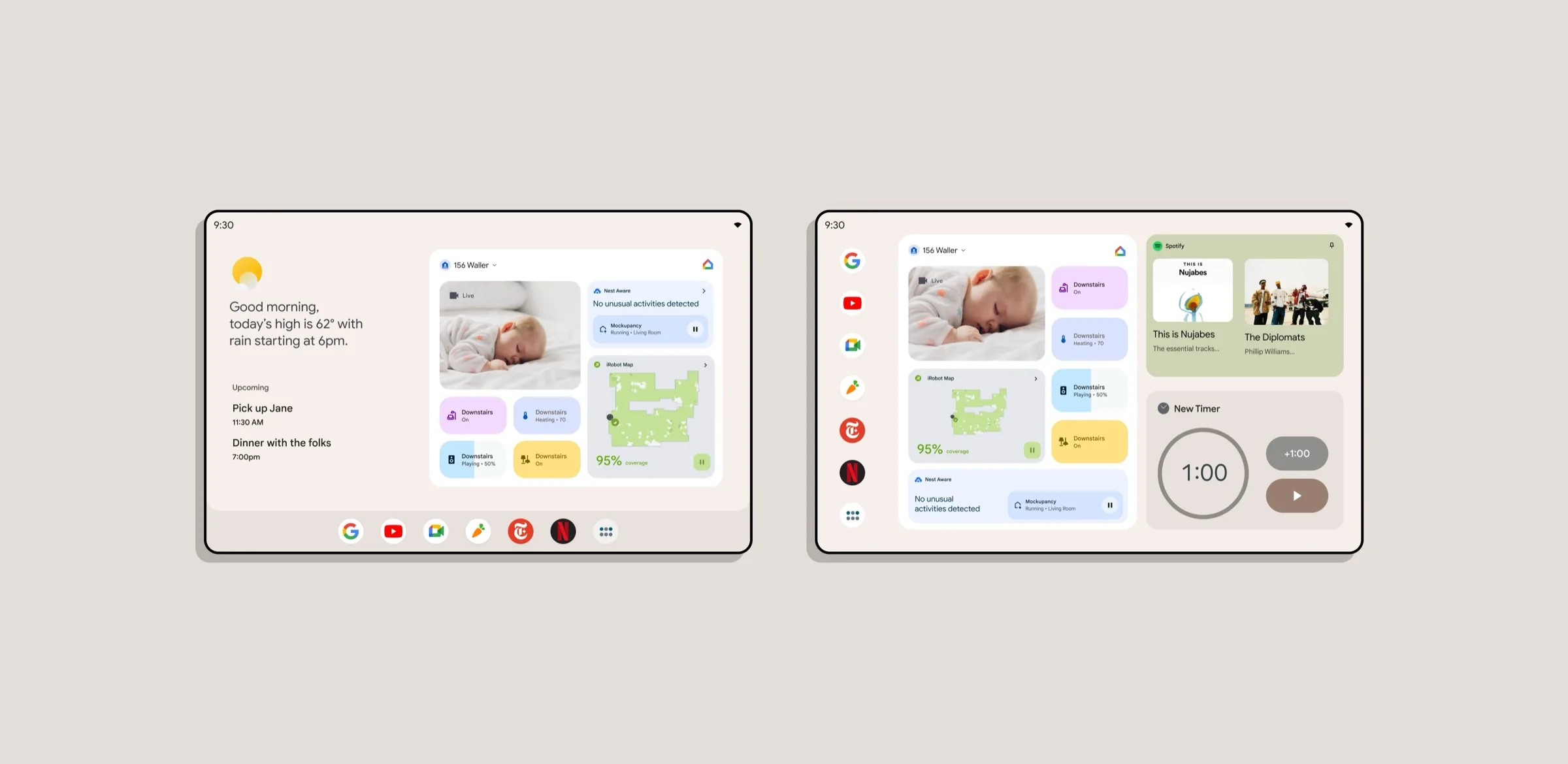
The unreleased product: one Android surface resolving the same content at two densities
Outcome
The final form was a tablet that no longer needed two product lines underneath it. One Android surface ran the density continuum end to end, and the smart display as a separate operating system and device family was retired into the converged platform.
- Platform
- One converged Android surface, held, docked, or across the room
- Retired
- The smart display as a separate OS and device family
- Patents
- Pending on the spatial model, density continuum, and approach behavior